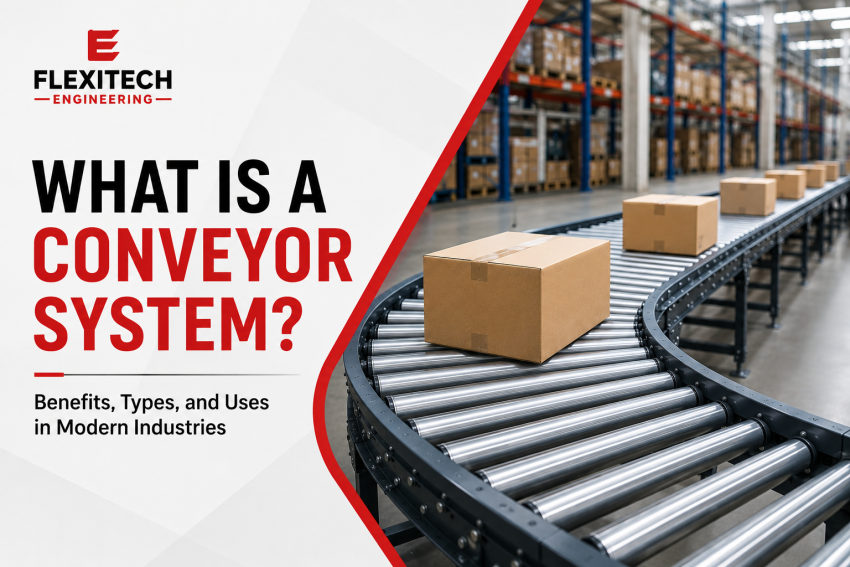
In today’s competitive industrial landscape, businesses are under constant pressure to improve productivity, reduce operational costs, and ensure faster movement of materials across facilities. Whether it is a manufacturing plant, warehouse, distribution center, airport, or e-commerce fulfillment hub, efficient material handling plays a crucial role in overall business performance. This is where a conveyor system becomes an essential part of modern operations.
A conveyor system helps automate the transportation of materials, products, and components from one point to another without excessive manual intervention. By creating a continuous flow of movement, conveyor systems improve efficiency, reduce labor requirements, and enhance workplace safety. From simple package handling to complex automated production lines, conveyor systems have transformed the way industries operate.
In this guide, we will explore what a conveyor system is, how it works, its benefits, various types, and the industries that rely on it every day.
What Is a Conveyor System?
A conveyor system is a mechanical material handling solution designed to transport products, goods, raw materials, or components within a facility. It consists of moving elements such as belts, rollers, chains, slats, or modular platforms that carry materials from one location to another.
The primary objective of a conveyor system is to automate material movement while minimizing manual handling. Instead of workers carrying products across a facility, the conveyor performs the transportation automatically, ensuring faster and more efficient operations.
Conveyor systems can be designed for horizontal, inclined, vertical, or overhead transportation depending on the operational requirements of a facility.
Today, conveyor systems are widely used in industries such as manufacturing, automotive, warehousing, logistics, pharmaceuticals, food processing, airports, and e-commerce.
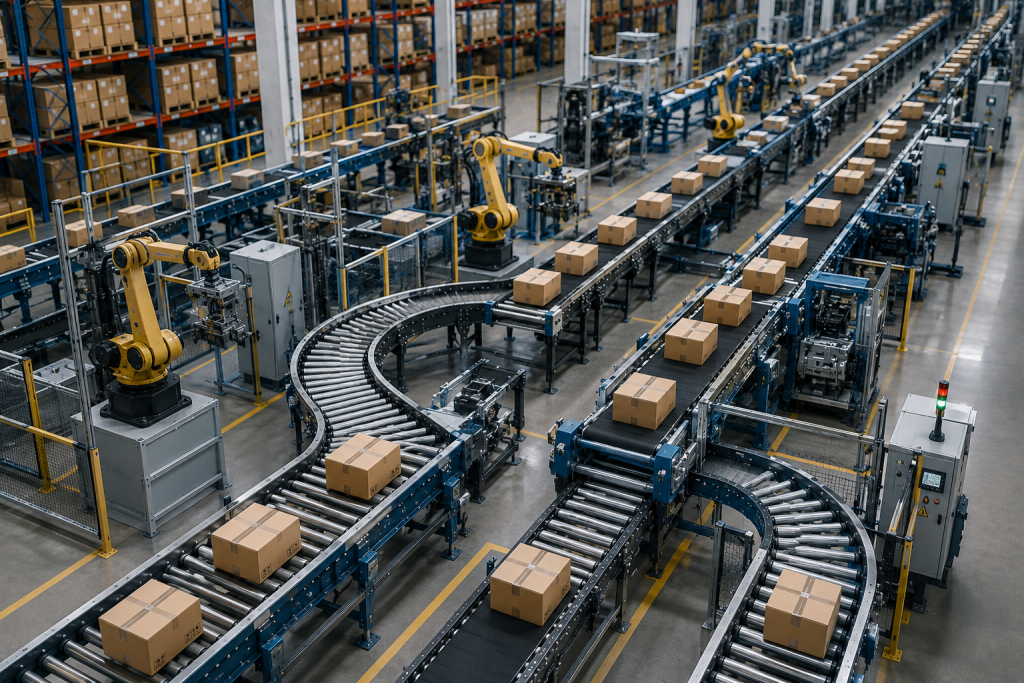
How Does a Conveyor System Work?
The working principle of a conveyor system is relatively straightforward. A drive mechanism, usually powered by an electric motor, generates movement that is transferred to the conveyor surface. Materials placed on the conveyor are then transported along a predefined path.
The exact operation depends on the type of conveyor being used. Some systems utilize belts for continuous movement, while others rely on rollers, chains, or slats. Modern conveyor systems may also include advanced technologies such as sensors, PLC controls, barcode scanners, sorting mechanisms, and automated tracking systems.
As products move through the conveyor, they can be directed to different workstations, packaging areas, storage locations, or shipping zones without manual intervention.
Why Conveyor Systems Are Essential for Modern Businesses
Material transportation is one of the most repetitive and labor-intensive tasks in industrial operations. Without a proper handling system, businesses often experience delays, bottlenecks, increased labor costs, and safety risks.
A conveyor system solves these challenges by ensuring smooth and continuous movement of materials. It eliminates unnecessary handling, improves workflow efficiency, and allows employees to focus on more productive activities.
As industries continue to embrace automation, conveyor systems have become the backbone of modern manufacturing and logistics operations.
Key Benefits of Conveyor Systems
Improved Productivity
One of the most significant advantages of conveyor systems is their ability to improve productivity. Since materials move continuously from one process to another, production delays are minimized.
Workers no longer spend time manually transporting products, allowing operations to run faster and more efficiently. This increased speed directly contributes to higher production output and faster order fulfillment.
Reduced Labor Costs
Manual material handling requires a considerable workforce. Conveyor systems automate transportation tasks, reducing dependence on manual labor.
By minimizing repetitive handling activities, businesses can lower labor expenses while allocating employees to higher-value tasks such as quality control, machine operation, and production management.
Enhanced Workplace Safety
Heavy lifting and repetitive transportation often lead to workplace injuries and employee fatigue. Conveyor systems significantly reduce these risks by automating material movement.
Employees have less exposure to hazardous lifting tasks, resulting in a safer working environment and fewer workplace accidents.
Modern systems also include emergency stop buttons, safety sensors, and protective guards to further improve operational safety.
Consistent Material Flow
Production interruptions can affect efficiency and profitability. Conveyor systems create a consistent flow of materials throughout the facility, ensuring that every process receives products at the right time.
This smooth workflow helps eliminate bottlenecks and improves overall operational performance.
Reduced Product Damage
Manual handling often increases the risk of product damage. Conveyor systems transport materials in a controlled manner, minimizing impacts, drops, and mishandling.
This is especially important for delicate products such as electronics, pharmaceuticals, packaged foods, and consumer goods.
Better Space Utilization
Many conveyor designs help businesses maximize available floor space. Systems such as Overhead Conveyor solutions transport products above working areas, freeing valuable floor space for production and storage activities.
Efficient space utilization becomes increasingly important as facilities grow and production demands increase.
Scalability and Flexibility
Conveyor systems can be customized and expanded as business requirements evolve. Whether a company needs to increase production capacity, add new processing stations, or automate additional workflows, conveyors can be modified to support future growth.
This flexibility makes conveyor systems a long-term investment for industrial facilities.
Different Types of Conveyor Systems
Choosing the right conveyor system depends on the type of material being handled, production requirements, and available facility space.
Belt Conveyor
A Belt Conveyor is one of the most commonly used conveyor systems in the world. It uses a continuous belt stretched between pulleys to transport products smoothly over short or long distances.
Belt conveyors are widely used in manufacturing plants, warehouses, packaging facilities, and distribution centers because they can handle a wide variety of materials efficiently.
Roller Conveyor
A Roller Conveyor uses a series of rollers to move products from one location to another. Depending on the application, roller conveyors can operate using gravity or motorized power.
These systems are ideal for cartons, pallets, boxes, and packaged products, making them popular in logistics and warehousing operations.
Assembly Conveyor
An Assembly Conveyor is specifically designed for manufacturing environments where products move through multiple workstations during assembly.
Industries such as automotive, electronics, appliances, and consumer goods manufacturing use assembly conveyors to improve workflow, reduce production time, and increase output.
Flexible Conveyor
A Flexible Conveyor provides maximum adaptability for dynamic material handling operations. It can be expanded, contracted, or repositioned based on operational requirements.
These conveyors are commonly found in warehouses, shipping facilities, and e-commerce fulfillment centers where layouts frequently change.
Overhead Conveyor
An Overhead Conveyor transports products above the production floor using suspended tracks.
This system is widely used in automotive plants, painting facilities, garment manufacturing, and assembly operations where floor space optimization is essential.
Spiral Conveyor
A Spiral Conveyor allows products to move vertically between different levels while occupying minimal floor space.
Warehouses and distribution centers frequently use spiral conveyors to maximize storage capacity and streamline vertical transportation.
Telescopic Conveyor
A Telescopic Conveyor is designed to extend and retract as needed, making it highly effective for truck loading and unloading applications.
Logistics companies and e-commerce fulfillment centers use telescopic conveyors to reduce loading times and improve operational efficiency.
Applications of Conveyor Systems Across Industries
Manufacturing Industry
Manufacturing facilities rely heavily on conveyor systems to transport raw materials, components, and finished products throughout the production process.
Whether it involves an Assembly Conveyor for production lines or a Belt Conveyor for material transport, conveyors help manufacturers achieve higher productivity and operational efficiency.
Warehousing and Distribution Centers
Modern warehouses use conveyor systems for inventory movement, sorting, packaging, and shipping.
A Roller Conveyor is often used for carton handling, while a Flexible Conveyor provides adaptability for changing warehouse layouts and seasonal demand fluctuations.
E-Commerce Fulfillment Centers
The rapid growth of online shopping has increased the demand for automated material handling systems.
Conveyor systems help e-commerce businesses process thousands of orders daily by automating sorting, packaging, and shipping operations.
A Telescopic Conveyor is particularly valuable in these environments because it speeds up loading and unloading activities.
Automotive Industry
Automotive manufacturers use conveyor systems extensively throughout vehicle production facilities.
Components move seamlessly between assembly stations, painting areas, inspection points, and packaging sections, ensuring efficient production flow.
Food Processing Industry
Food manufacturers require hygienic and reliable transportation systems for ingredients and finished products.
Conveyor systems help maintain product quality while supporting packaging, sorting, inspection, and processing operations.
Pharmaceutical Industry
Pharmaceutical companies depend on conveyor systems for precise handling of medicines, packaging materials, and finished products.
Automated transportation improves accuracy while maintaining strict quality and hygiene standards.
Airport Baggage Handling
Airports use sophisticated conveyor networks to transport passenger luggage through check-in, security screening, sorting, and loading areas.
These systems ensure baggage reaches the correct destination efficiently and accurately.
How Conveyor Systems Support Industrial Automation
Industrial automation is becoming a key focus for businesses seeking greater efficiency and competitiveness. Conveyor systems serve as the foundation of many automated facilities by connecting various machines, workstations, and production processes.
Modern conveyor systems can integrate with:
- PLC control systems
- Robotic arms
- Barcode scanners
- Warehouse management software
- Automated storage systems
- Sorting equipment
- Vision inspection systems
This integration creates a fully automated workflow that improves accuracy, productivity, and operational visibility.
How to Choose the Right Conveyor System
Selecting the right conveyor solution requires careful evaluation of operational requirements.
Businesses should consider:
- Product dimensions
- Material weight
- Transportation distance
- Required speed
- Facility layout
- Production volume
- Industry-specific regulations
- Future expansion plans
Partnering with an experienced conveyor manufacturer ensures the selected system aligns with both current and future business objectives.
Future Trends in Conveyor Technology
As Industry 4.0 and smart manufacturing continue to evolve, conveyor technology is becoming more intelligent and connected.
Emerging trends include:
- IoT-enabled monitoring
- Predictive maintenance systems
- AI-driven performance optimization
- Energy-efficient drive technology
- Robotic integration
- Automated sorting solutions
- Real-time operational analytics
These advancements help businesses improve productivity while reducing downtime and maintenance costs.
Why Choose FlexiTech Engineering for Conveyor Solutions
When investing in a conveyor system, choosing the right supplier is crucial for long-term success. FlexiTech Engineering specializes in designing and manufacturing customized material handling solutions for various industries.
From Assembly Conveyor systems and Roller Conveyor solutions to advanced Belt Conveyor, Flexible Conveyor, Overhead Conveyor, Spiral Conveyor, and Telescopic Conveyor systems, FlexiTech Engineering delivers reliable solutions tailored to specific operational requirements.
With a focus on innovation, quality engineering, and customer satisfaction, FlexiTech Engineering helps businesses improve efficiency, automate workflows, and achieve sustainable growth.
Conclusion
A conveyor system is one of the most valuable investments for businesses looking to improve material handling efficiency and operational performance. By automating the movement of products and materials, conveyor systems help reduce labor costs, improve workplace safety, increase productivity, and support industrial automation.
Whether used in manufacturing plants, warehouses, logistics facilities, airports, or e-commerce fulfillment centers, conveyor systems continue to play a critical role in modern industry. As automation technologies advance, conveyor systems will remain at the center of efficient and intelligent material handling operations.
FAQs
What is a conveyor system used for?
A conveyor system is used to transport materials, products, and components efficiently within a facility while reducing manual handling and improving productivity.
What are the main benefits of conveyor systems?
The main benefits include increased productivity, reduced labor costs, enhanced workplace safety, consistent material flow, and reduced product damage.
Which industries use conveyor systems?
Conveyor systems are commonly used in manufacturing, warehousing, logistics, automotive, food processing, pharmaceuticals, airports, and e-commerce industries.
What is the difference between a Belt Conveyor and a Roller Conveyor?
A Belt Conveyor uses a continuous moving belt, while a Roller Conveyor uses rollers to transport products. The choice depends on the material type and operational requirements.
Can conveyor systems be customized?
Yes, conveyor systems can be customized based on product size, weight, facility layout, production volume, and industry-specific needs.
How do conveyor systems improve automation?
Conveyor systems integrate with PLCs, robotics, sensors, and warehouse management systems to create automated workflows that improve efficiency and accuracy.