Introduction: Why the Powered Roller Conveyor Matters
Picture this: a factory floor humming, forklifts weaving, pallets being loaded and unloaded, a warehouse buzzing. Now imagine instead of boxes piling up, they glide effortlessly down a line—no one sweating, no delays. That’s the magic of a powered roller conveyor.
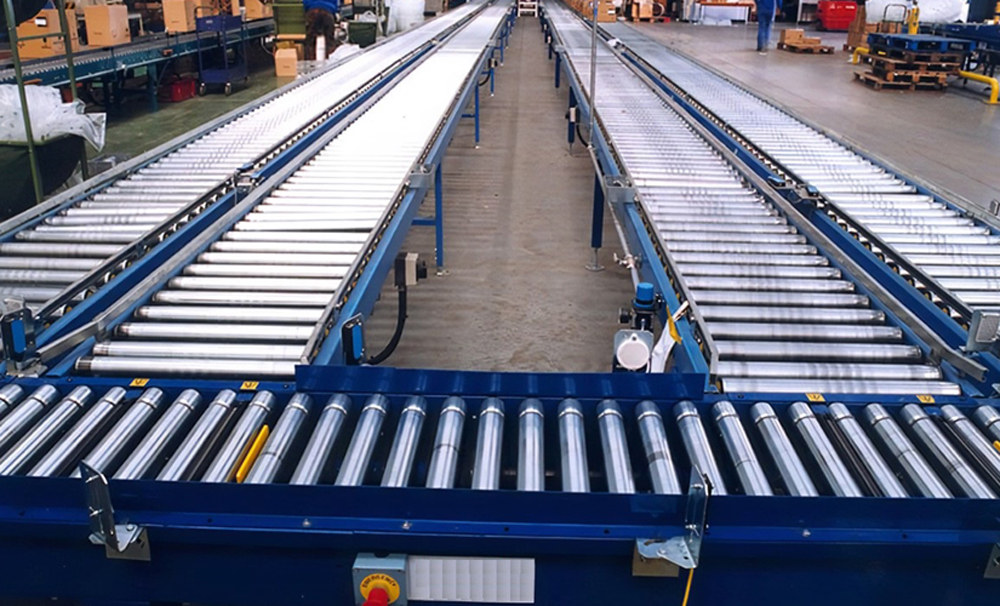
When you see the term powered roller conveyor, it means a conveyor system where rollers themselves are driven (via motor, chain, or belt) so the goods move under power—not just gravity or pushing. According to Flexitech Engineering, powered roller conveyors are designed for “medium- to large-size product” and are “cost-effective, durable, low maintenance” solutions.
About Flexitech Engineering: Your Trusted Partner
Before you pick any old conveyor, know who’s behind it. Flexitech Engineering is a manufacturer-supplier based in Ghaziabad, India, specialising in conveyor systems and material handling solutions.
They list powered roller conveyors under their roller conveyor portfolio and emphasise adaptability across industries like warehousing, manufacturing and distribution.
When you choose them: you’re not just buying rollers and motors—you’re buying support, knowhow, and the backing of a provider that understands the daily hustle of production and logistics.
What the Powered Roller Conveyor Service Includes
Flexitech Engineering offers a full-fledged service for powered roller conveyors that covers:
1. Design & Customisation
Every operation is different: loads vary, layouts vary, speeds vary. Flexitech works with you to determine the right roller size, frame material, motor power, speed control, and integration. Their website notes that these conveyors are “adaptable to many industries”.
2. Manufacturing & Quality Construction
The powered roller conveyors from Flexitech are built with durability in mind. For example, typical spec listings show rollers of 7 mm diameter, aluminium or mild-steel frames, stainless steel rollers for wear resistance, brand: Flexitech Engineering. So you get a system that’s not made for the showroom—it’s made for the shop-floor.
3. Installation & Commissioning
Flexitech doesn’t just deliver the conveyor and walk away. They assist with installation, setup, alignment, power supply, and initial calibration. This helps ensure the conveyor runs as intended from day one.
4. After-Sales Support & Maintenance
Maintenance is key. A powered roller conveyor unattended becomes a bottleneck. Flexitech highlights “low maintenance costs” as one of the benefits of their conveyors. Plus, choosing a reputable vendor means you get access to parts, service support, and operational advice.
5. Upgrades & Integration
As your operation grows, you’ll want the conveyor to scale. Flexitech offers adaptability: the ability to integrate the powered roller conveyor with other conveyors, warehouse automation, accumulation zones, sensors, etc. While this is not elaborated in full detail on their site, the ecosystem of their products suggests such flexibility.
Key Features & Benefits
Let’s break out what you’re really getting, in plain speak (with a little slang to keep it real):
- Propulsion built-in: Unlike gravity conveyors where you rely on tilt or manual push, these motorised rollers drive the load. That means smooth movement, fewer hiccups.
- Cost-effective: Flexitech claims these conveyors are a budget-smart option for many industries.
- Durable build: Aluminium frames, stainless steel rollers, heavy-duty motors—designed for the long haul.
- Low maintenance: Because things move smoothly and the construction is solid, you get fewer breakdowns or jams. One customer might say “we installed it and forgot about it—for months.”
- Adaptable across industries: Whether you’re in warehousing, manufacturing, beverage distribution or e-commerce, the powered roller conveyor plays nicely. Flexitech lists uses for "distribution, manufacturing, warehousing".
- Operational efficiency: When things are moving reliably, labour costs drop, throughput increases, and your line doesn’t look like a traffic jam at rush hour.
- Integration-ready: Works with upstream/downstream systems—so the powered roller conveyor isn’t a silo; it’s part of your flow.
Applications: Where It Shines
A few real-world anecdotes help illustrate:
- In a large e-commerce fulfilment centre, boxes are coming in fast. Without a powered roller conveyor, workers are pushing manually or waiting for items to arrive. With Flexitech’s powered roller conveyor, the boxes zip along automatically, aligning themselves for the next operation.
- In a manufacturing line for appliances, the assembly station passes off units to a conveyor. The powered rollers keep each unit moving at pace so the next station—packing—never sits idle.
- In a warehouse loading bay, pallets need to move from storage to trucks. A heavy-duty powered roller conveyor handles the transition smoothly, reducing forklift wait times and bumping.
Choosing the Right Powered Roller Conveyor: Tips & Considerations
- Load size & weight: Know how heavy your items are and how big they are. Flexitech lists a spec of 20 kg per foot for one model.
- Roller diameter & spacing: Smaller rollers suit lighter loads, bigger rollers handle heavier stuff. The spec “roller diameter 7 mm” is a good indicator for certain models.
- Motor power & speed control: You want adjustable speed, starts and stops that don’t jar the load.
- Frame material & environment: Is your conveyor exposed to moisture, dust, heavy-use? Choose materials accordingly (e.g., stainless steel rollers, corrosion-resistant frames).
- Layout & footprint: Does it need to go straight, or bend, incline, decline? Flexitech offers a variety of conveyors—including powered roller types—so that’s good.
- Integration with existing systems: Will it plug into your current automation, PLCs, sensors?
- Maintenance access & downtime: Even the best system needs maintenance. Choose one you can service easily.
- Budget vs ROI: Sure, you might pay more upfront than a gravity roller, but the gains in throughput, labour savings and cleanliness of flow often pay back quickly.
- Vendor support & after-sales: This is where Flexitech has a leg up—being a manufacturer with support, they justify their credibility.
And one more tip: walk the floor with the vendor. See how it fits in your real workflow. Don’t just pick specs on paper; pick what fits your rhythm.
Why Flexitech Engineering Stands Out
Why roll with Flexitech rather than some generic conveyor seller? Here are some reasons, told with a little flair:
- They are specialists in conveyor systems—everything from belt conveyors to roller conveyors. That means powered roller conveyor isn’t just a sideline for them—it’s core.
- Their website highlights “200+ Projects”, “500+ Installations”, “100+ Clients”. You get that vibe: they’ve walked the walk.
- Their claim of “Cost effective; Durable; Low maintenance costs; Adaptable to many industries” for their powered roller conveyor line gives you the assurances.
- Being based in India (Ghaziabad, UP) means local support for many clients in India, faster lead times, more accessible customization.
- They provide a full service lifecycle—design, manufacturing, installation, support—not just “we sell you a conveyor”.
In short: when you choose Flexitech for a powered roller conveyor, you’re getting more than steel and motors—you’re getting a partner.
Potential Challenges & How Flexitech Engineering Handles Them
No system is perfect; here are the typical pain-points and how Flexitech addresses them:
- Space constraints: Sometimes your floor is crowded. Flexitech’s customizable layouts and modular systems help fit into tight footprints.
- Work-in-progress staging & accumulation: If items are queuing, you don’t want jams. Powered roller conveyors by Flexitech are suited for medium-to-large sized loads and designed for flow rather than stop-start. Their site emphasises “medium- to large-size product”.
- Maintenance downtime: When a conveyor fails, the line stops. The low-maintenance claim plus the support network of Flexitech helps reduce downtime.
- Integration with upstream/downstream equipment: Flexitech’s broad product range (flexible conveyors, belt conveyors, roller conveyors, etc.) means they can integrate more easily rather than patching together incompatible systems.
- Operator safety: Powered rollers can be a risk if not designed safely. While the website doesn’t go into enormous depth on safety features, choosing a reputable manufacturer like Flexitech hints at adherence to industry standards and safe construction practices. Always confirm safety guards, emergency stops, and proper clearances.
Service Process: Step by Step
Here’s how Flexitech Engineering typically works through the powered roller conveyor service lifecycle:
- Consultation & site visit – They come in, check your workflow, loads, throughput, floor layout.
- Proposal & design – Based on specs (load, speed, layout) they draft the conveyor layout, motor specs, frame materials, integration points.
- Fabrication & manufacturing – Build the conveyor, test rollers, motors, frame, ensure build quality.
- Delivery & installation – Ship the system, install on-site, align, connect power, test.
- Commissioning & training – Run the system, adjust speed, ensure it syncs with upstream/downstream operations, train your staff.
- After-sales support & maintenance – Provide spare parts, maintenance schedule, troubleshoot if issues crop up.
- Upgrades & expansions (if needed) – As your operation grows, add on more sections, integrate with other conveyors or automation.
If any step falters, you end up with “conveyor blues”—but with Flexitech’s service model, the risk is significantly reduced.