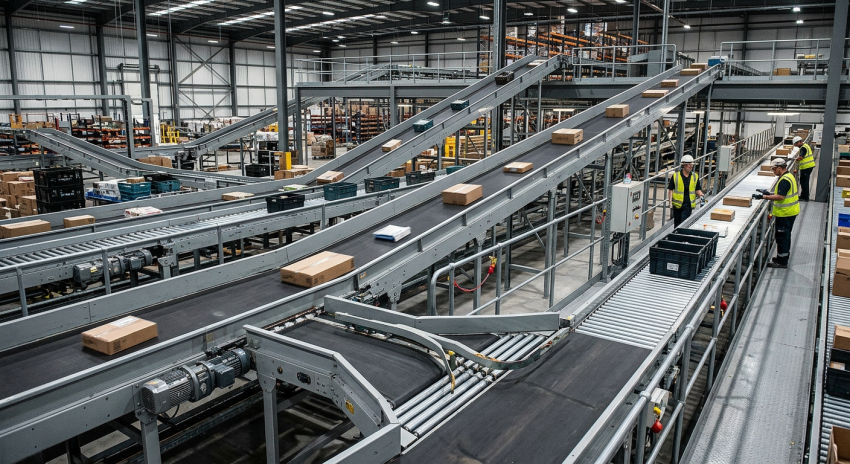
In modern industrial environments, efficiency and precision are essential for maintaining productivity and meeting growing demand. One of the most widely used solutions for material handling is the belt conveyor system. Known for its versatility and reliability, this system plays a crucial role in transporting goods across various industries, including manufacturing, logistics, food processing, and warehousing.
Belt conveyor systems have evolved significantly over time. Today, they are not just simple transport mechanisms but advanced systems integrated with automation, sensors, and smart controls. Understanding how these systems work, their different types, and their applications can help businesses choose the right solution for their operations.
What Is a Belt Conveyor System?
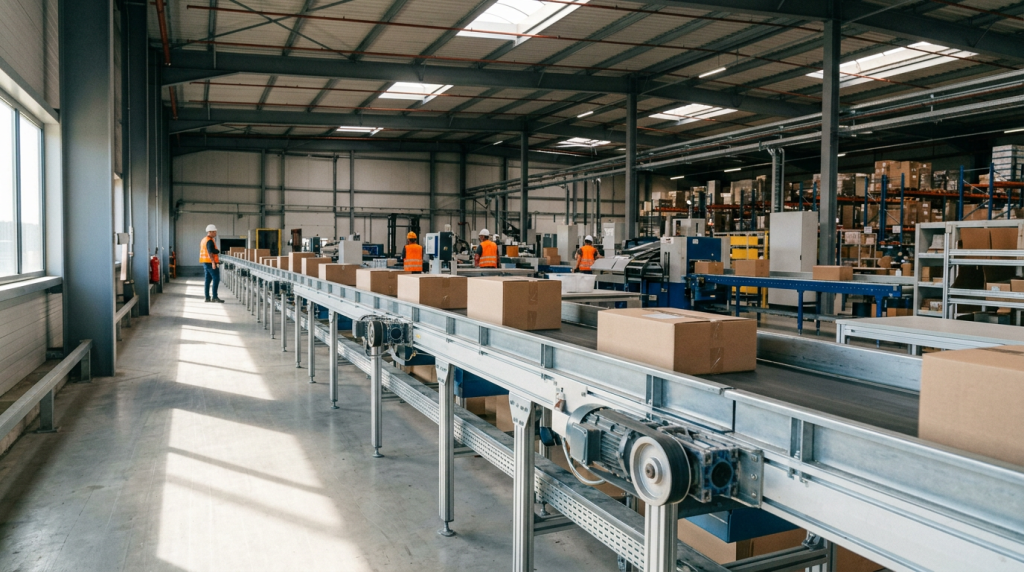
A belt conveyor system is a type of material handling equipment that uses a continuous belt to transport items from one location to another. The belt is typically supported by rollers or a flat surface and is driven by a motorized system that ensures smooth and consistent movement.
These systems are widely preferred because they can handle a variety of materials, ranging from lightweight packages to heavy industrial goods. Compared to other conveyor types, belt conveyors offer a balance of flexibility, efficiency, and cost-effectiveness.
In many setups, belt conveyors are combined with other systems such as the free flow conveyor to create a seamless production or logistics workflow.
How Belt Conveyor Systems Work
The working principle of a belt conveyor system is relatively simple yet highly effective. It consists of a continuous belt looped around pulleys. One of the pulleys is powered by a motor, which drives the belt forward, allowing materials placed on it to move from one point to another.
The system includes components such as rollers, frames, motors, and control units that work together to ensure smooth operation. Advanced systems also include sensors and automation features that enhance performance and efficiency.
Depending on the application, belt conveyors can be integrated with vertical systems like the spiral conveyor or overhead transport solutions such as the overhead conveyor to create a multi-level material handling setup.
Types of Belt Conveyor Systems
Belt conveyor systems come in various types, each designed to meet specific industrial requirements. Understanding these types helps in selecting the right system for your operations.
For example, the modular belt conveyor is known for its durability and flexibility, making it suitable for heavy-duty and hygienic applications. It is commonly used in industries where cleanliness and strength are critical.
In contrast, the slat conveyor is ideal for handling heavy or irregularly shaped items that require additional support during transportation.
Other systems, such as the bend roller conveyor, allow smooth directional changes, making them suitable for complex layouts where space optimization is necessary.
For simpler applications, the gravity roller conveyor provides a cost-effective solution, while the powered roller conveyor offers controlled and automated movement for more advanced operations.
Key Functions of Belt Conveyor Systems
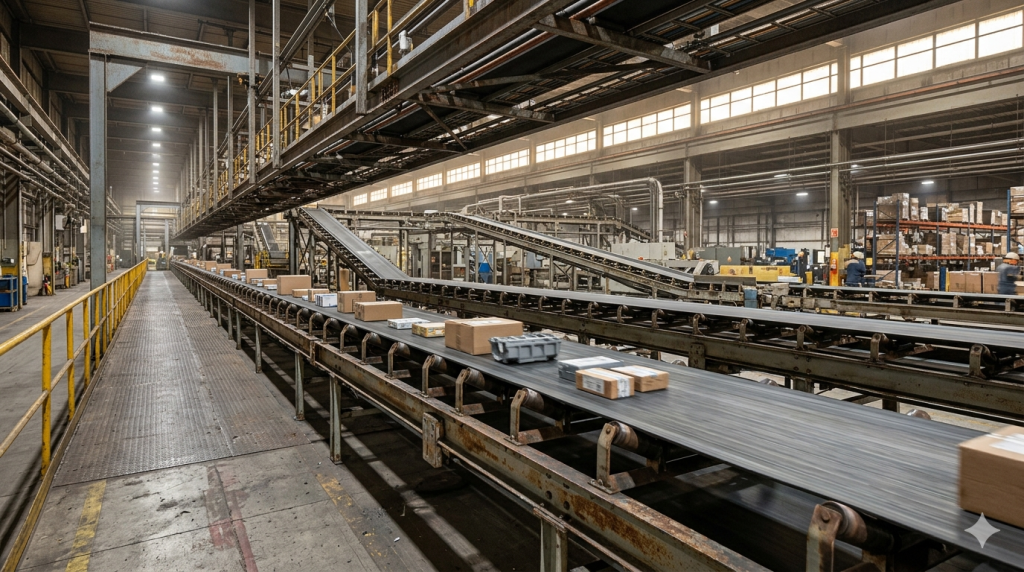
The primary function of a belt conveyor system is to transport materials efficiently within a facility. However, modern systems offer much more than basic transportation.
They help maintain a continuous flow of materials, reducing bottlenecks and improving productivity. They also ensure consistency in operations, which is essential for maintaining quality standards.
Additionally, belt conveyors can be integrated with systems like the FIFO racks and joints to support organized inventory management and ensure proper material flow.
Applications Across Different Industries
Belt conveyor systems are used across a wide range of industries due to their versatility and efficiency. In manufacturing, they are used to transport components between different stages of production. In logistics and warehousing, they help streamline sorting, packaging, and distribution processes.
For example, in large-scale operations, equipment like the truck loading conveyor is used alongside belt systems to improve loading and unloading efficiency.
In assembly-based industries, advanced setups such as the refrigerator air conditioning assembly line and the battery assembly line rely heavily on conveyor systems to ensure synchronized production.
Benefits of Belt Conveyor Systems
Belt conveyor systems offer several advantages that make them a preferred choice for material handling. One of the biggest benefits is their ability to handle a wide range of materials, from small items to large and heavy goods.
They also improve efficiency by reducing manual handling and ensuring a continuous workflow. This leads to higher productivity and lower operational costs.
Another important benefit is their flexibility. Systems like the flexible conveyor and the telescopic conveyor can be adjusted to different layouts and operational needs, making them ideal for dynamic environments.
Additionally, belt conveyors contribute to a safer workplace by minimizing the need for manual lifting and reducing the risk of injuries.
Enhancing Safety and Ergonomics
Safety is a critical factor in industrial operations, and belt conveyor systems are designed to enhance workplace safety. By automating material handling, they reduce the risk of injuries associated with manual labor.
Workstations like the ESD workstation further improve safety by protecting sensitive components and ensuring a controlled working environment.
Modern conveyor systems also include safety features such as sensors, emergency stop buttons, and protective guards to ensure safe operation.
The Future of Belt Conveyor Systems
The future of belt conveyor systems is closely linked to advancements in technology. With the rise of Industry 4.0, these systems are becoming more intelligent and connected.
IoT-enabled conveyors can provide real-time data on performance, allowing businesses to monitor operations and identify inefficiencies. AI-driven analytics enable predictive maintenance, reducing downtime and improving reliability.
As industries continue to evolve, belt conveyor systems will play a key role in enabling automation, improving efficiency, and supporting sustainable practices.
Conclusion
Belt conveyor systems are an essential part of modern industrial operations. Their ability to transport materials efficiently, handle diverse applications, and integrate with advanced technologies makes them a valuable asset for businesses.
By understanding their function, types, and applications, businesses can make informed decisions and choose the right system for their needs. As technology continues to advance, belt conveyors will remain a cornerstone of efficient and reliable material handling.
Frequently Asked Questions (FAQs)
What is a belt conveyor system?
A belt conveyor system is a material handling system that uses a continuous belt to transport goods efficiently within a facility.
What industries use belt conveyor systems?
Industries such as manufacturing, logistics, food processing, and warehousing widely use belt conveyor systems.
What are the advantages of belt conveyors?
They offer efficiency, flexibility, cost-effectiveness, and the ability to handle a wide range of materials.
Can belt conveyor systems handle heavy materials?
Yes, certain types like modular belt conveyors are designed for heavy-duty applications.
Are belt conveyor systems customizable?
Yes, they can be tailored to meet specific operational requirements and layouts.
What is the future of belt conveyor systems?
The future includes smart systems integrated with IoT and AI for improved efficiency and predictive maintenance.